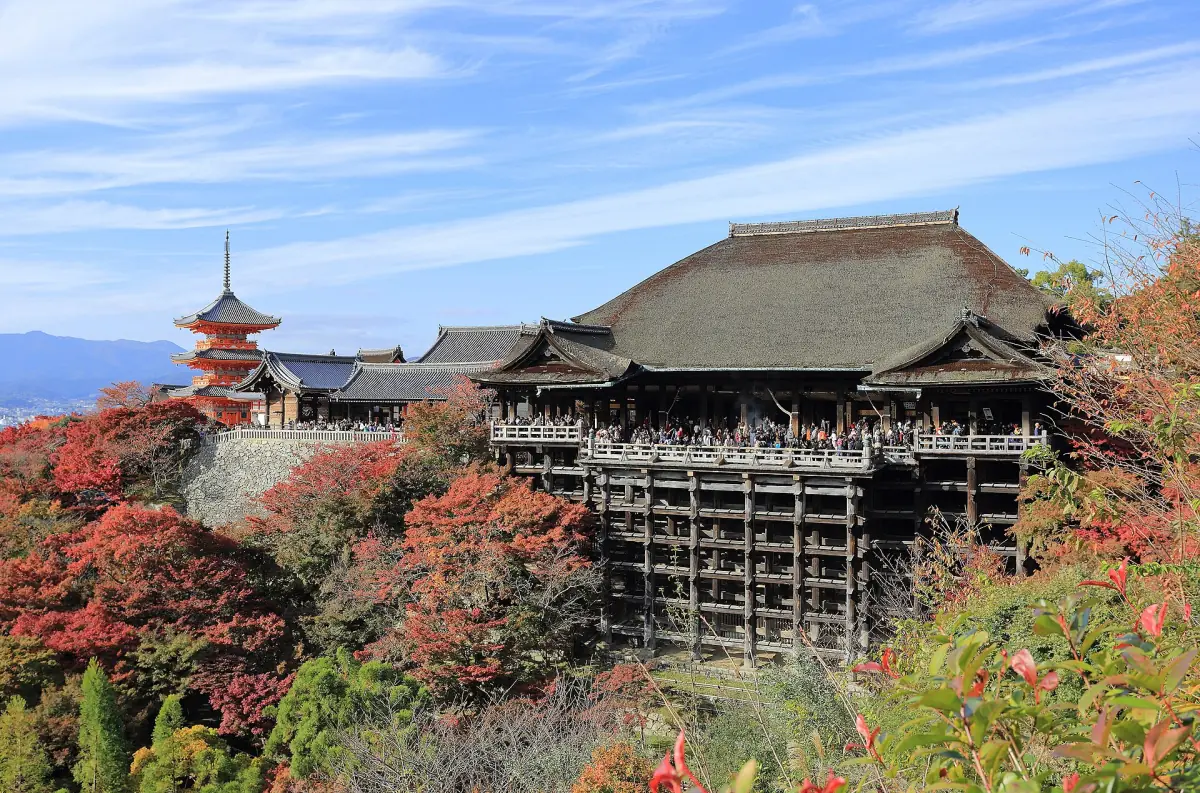
Kiyomizu-dera in a nutshell
Kiyomizu-dera is a Buddhist temple on the slope of Mount Otowa in the Higashiyama district of Kyoto, dedicated to Kannon. The address is 1-294 Kiyomizu, Higashiyama-ku. The grounds include the main hall with its wooden stage, Okuno-in, the Otowa Waterfall and the Zuigu-do hall. The present main hall dates from 1633, and the temple belongs to the World Heritage site Historic Monuments of Ancient Kyoto, listed in 1994.
Most visitors arrive from Kyoto Station by city bus 206, get off at Gojozaka and walk uphill for about 10 minutes. The walk passes shops and the old lanes of Higashiyama, so many people plan an hour or two for the approach alone. Admission and hours below are the 2026 values.
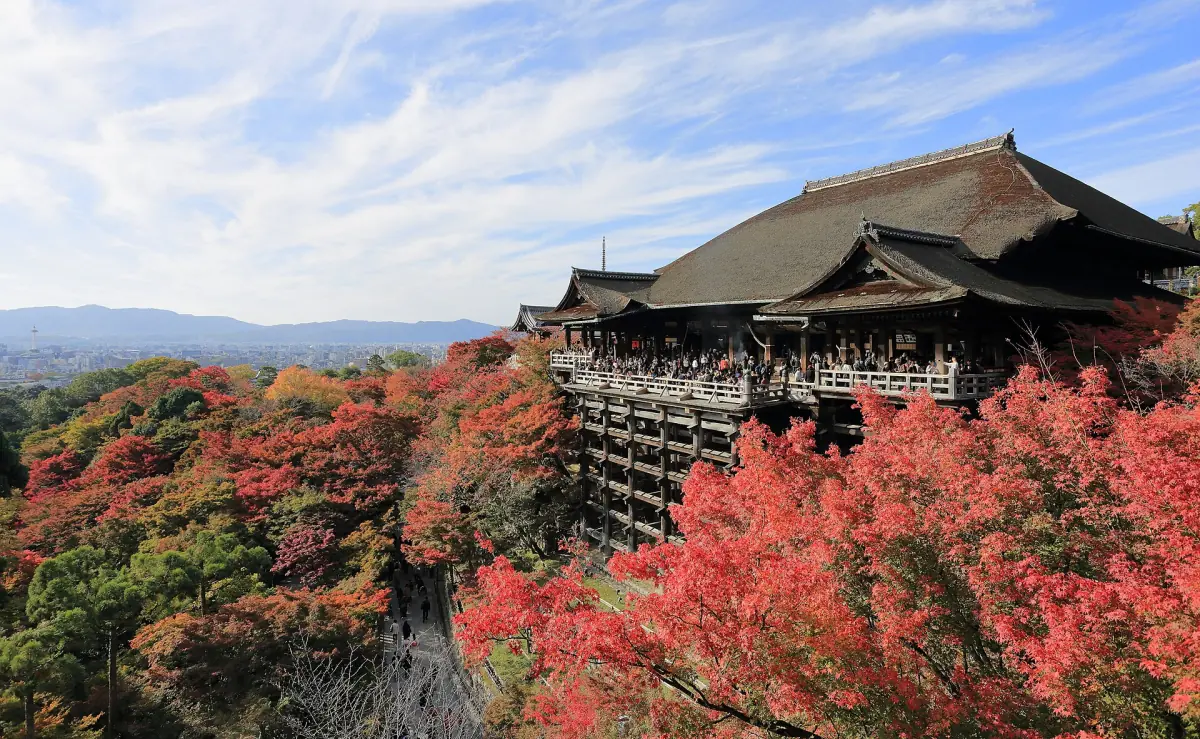
What this guide covers
Practical planning for one of Kyoto's busiest temples.
This is an independent site. It is not run by the temple, by Kyoto City or by any tour company, rental shop or hotel. It explains what you pay, when the gates are open, what to see on the grounds and how the day around the temple fits together: the stone lanes of Sannenzaka and Ninenzaka, the Yasaka Pagoda, Gion and, if you like, an afternoon in a rented kimono.
A temple visit, a walk through Higashiyama, Gion and a kimono rental are separate things with separate prices. The temple ticket is not part of a walking tour or a rental, so each page below says what is and is not included.
Our picks: Kiyomizu-dera tours
A guided temple visit, an evening in Gion and a kimono for the day.
Hand-picked tours, booked through GetYourGuide. Prices are indicative starting prices in US dollars (as of October 2026). Tap a tour for live availability and the current price in your currency.
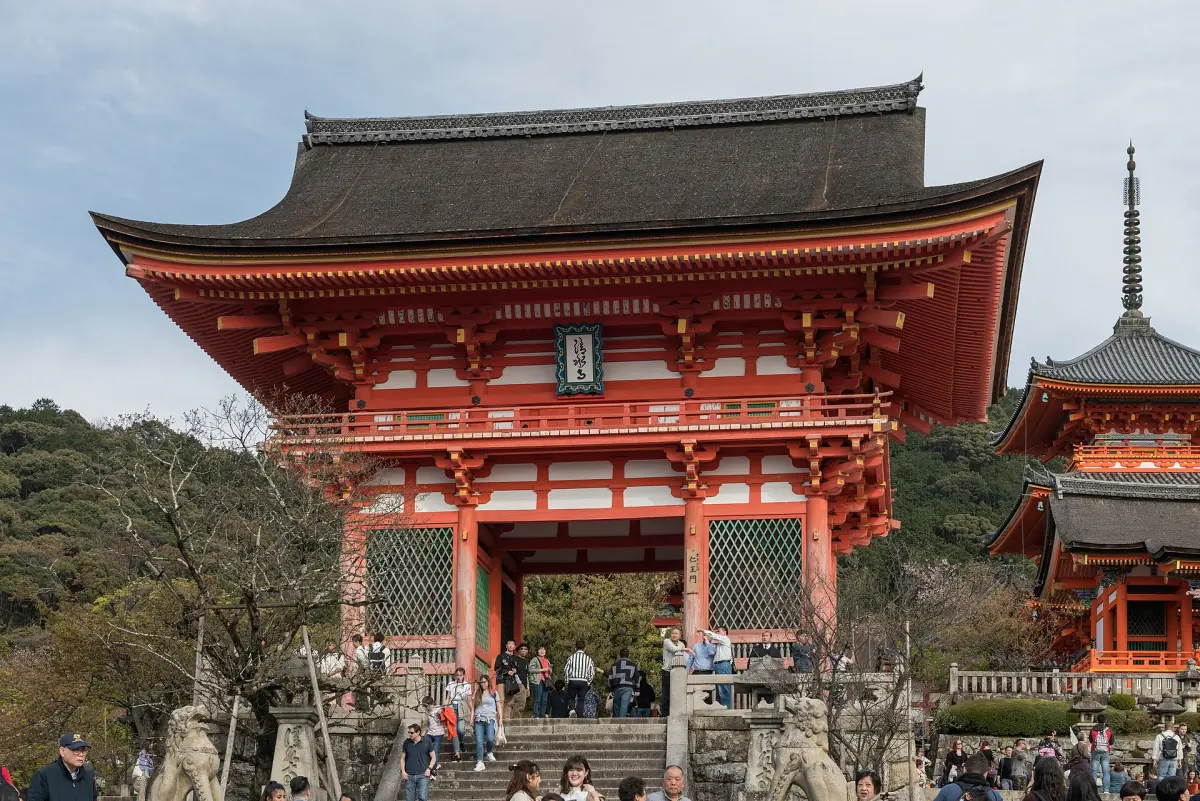
Guided walk through Kiyomizu-dera
A 90-minute tour with an English-speaking local guide, temple admission included. Food, drinks and the way to the meeting point are not.
Check availability →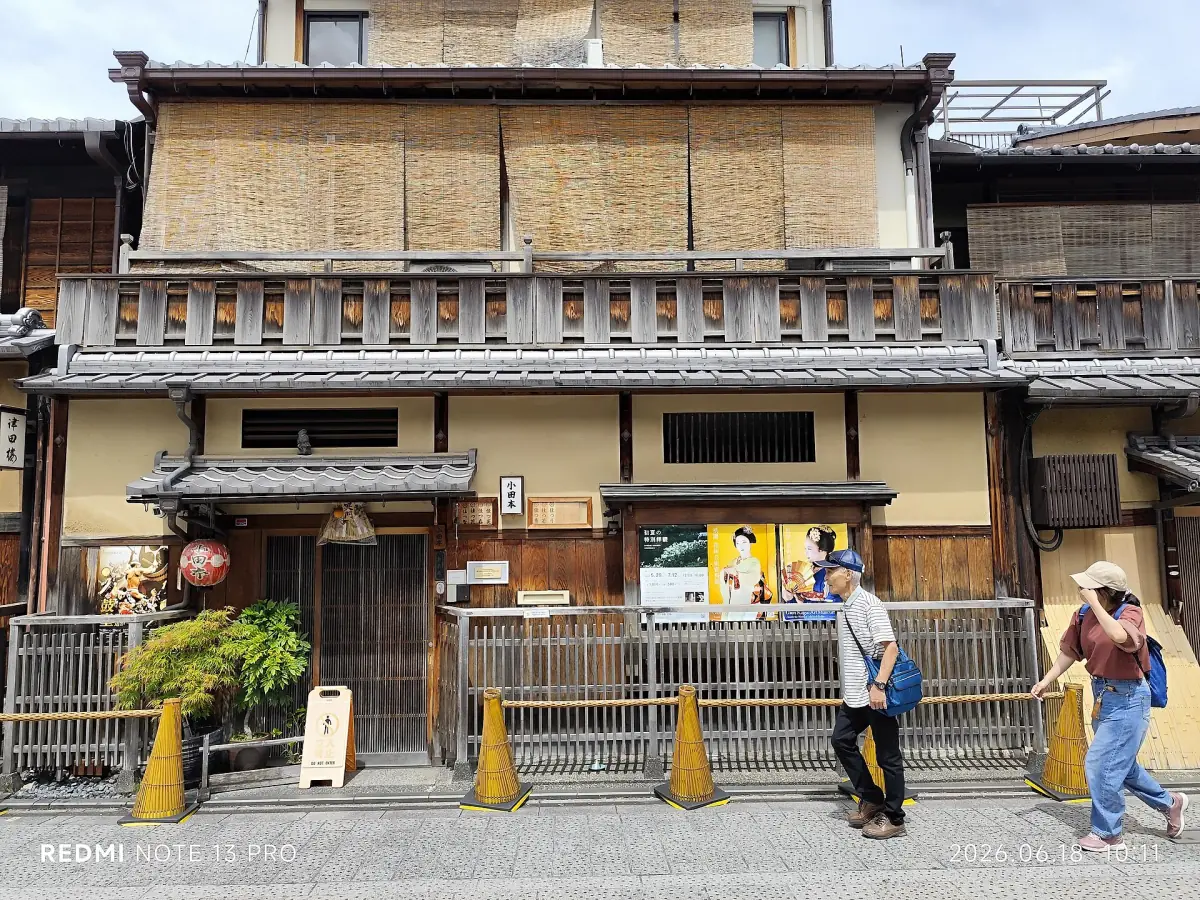
Evening walking tour through Gion
About 100 minutes through the district with a guide who also takes photos for you along the way.
Check availability →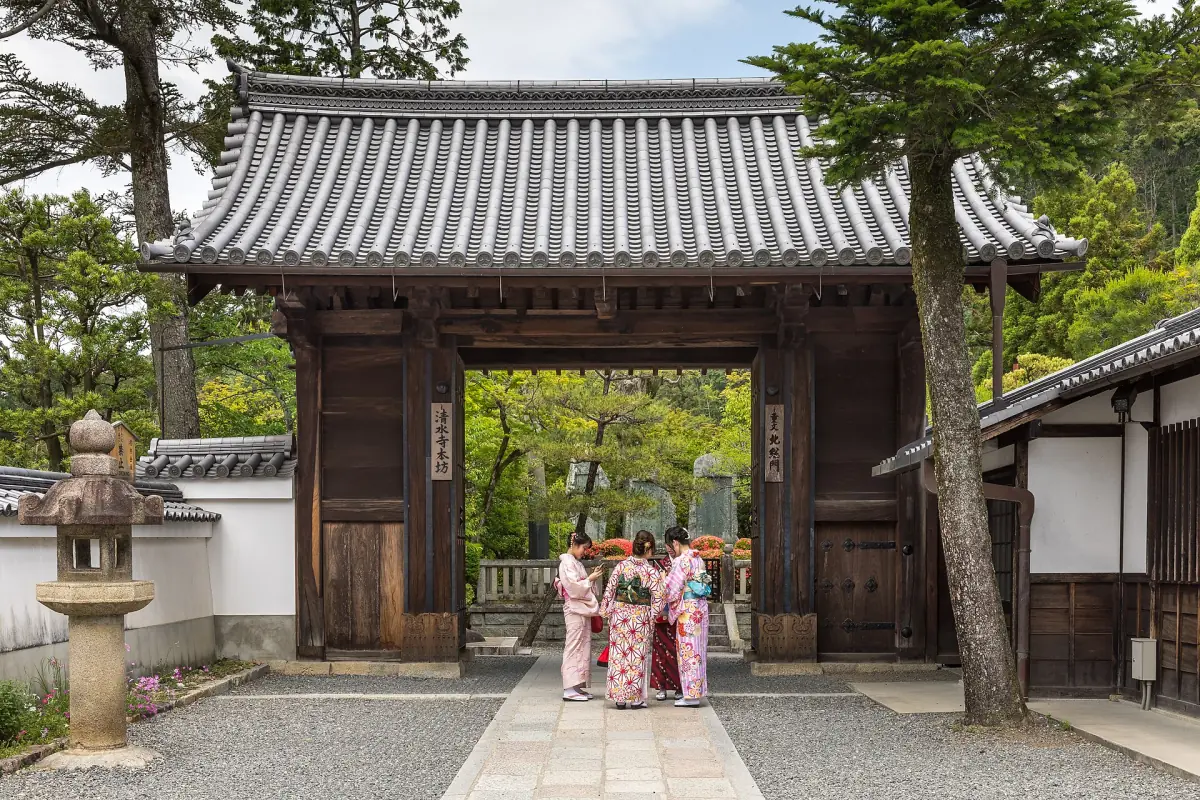
Kimono rental with hairstyling near Kiyomizu
Kimono until 5 pm with hairstyling, accessories, dressing help, sandals and luggage storage. Attraction entries are not included.
Check availability →Kyoto tours and day trips
Walking tours through Higashiyama and Gion, food and culture tours and guided days around Kyoto, with live prices and availability.
Plan your visit
One page for each question you are likely to have.
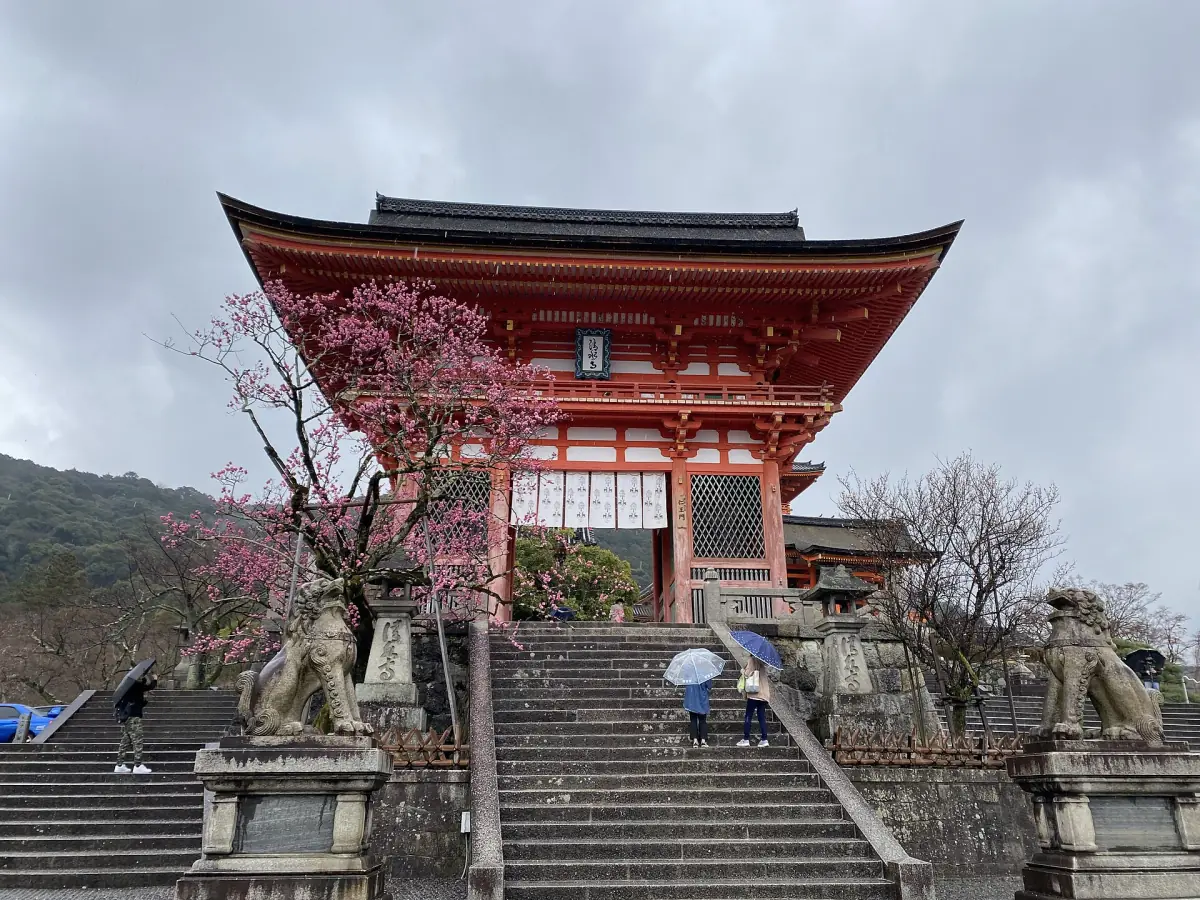
Entrance fee and opening hours
JPY 500 for adults in 2026, the hours by date and the night openings.
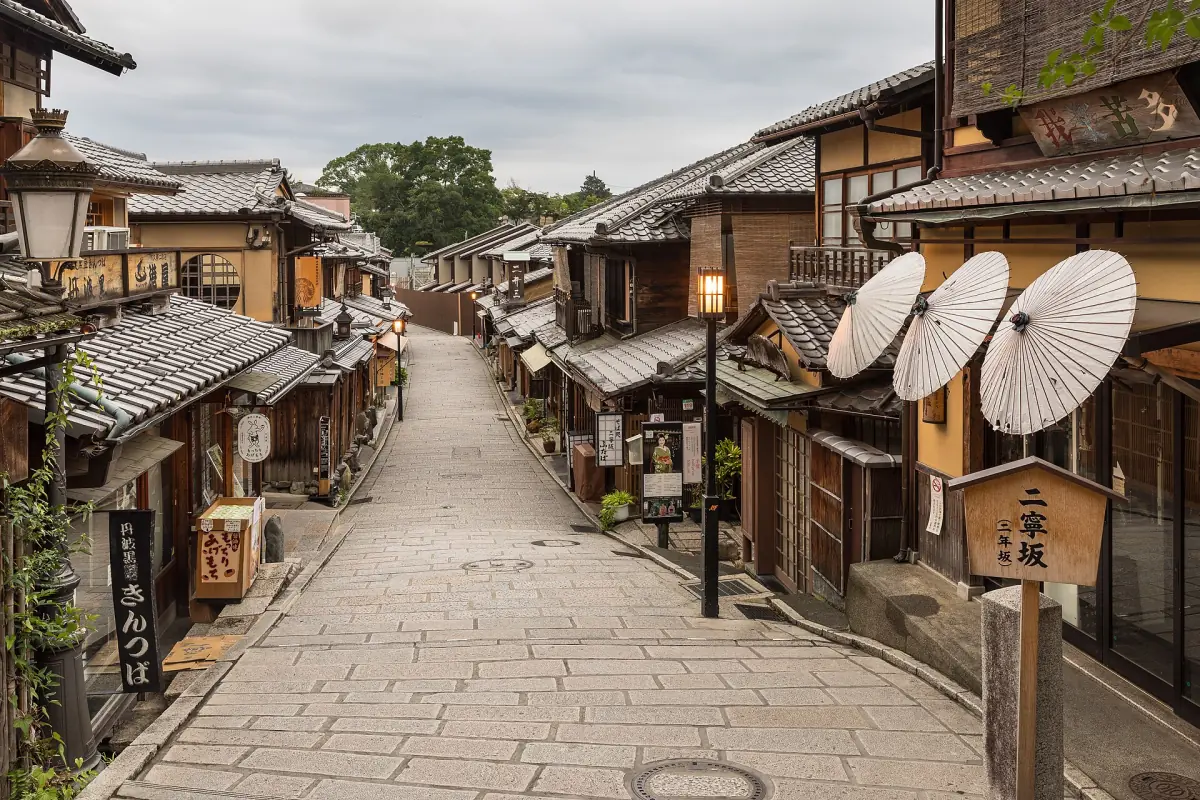
Kyoto walking tours
What a Higashiyama and Gion walk includes and what it does not.
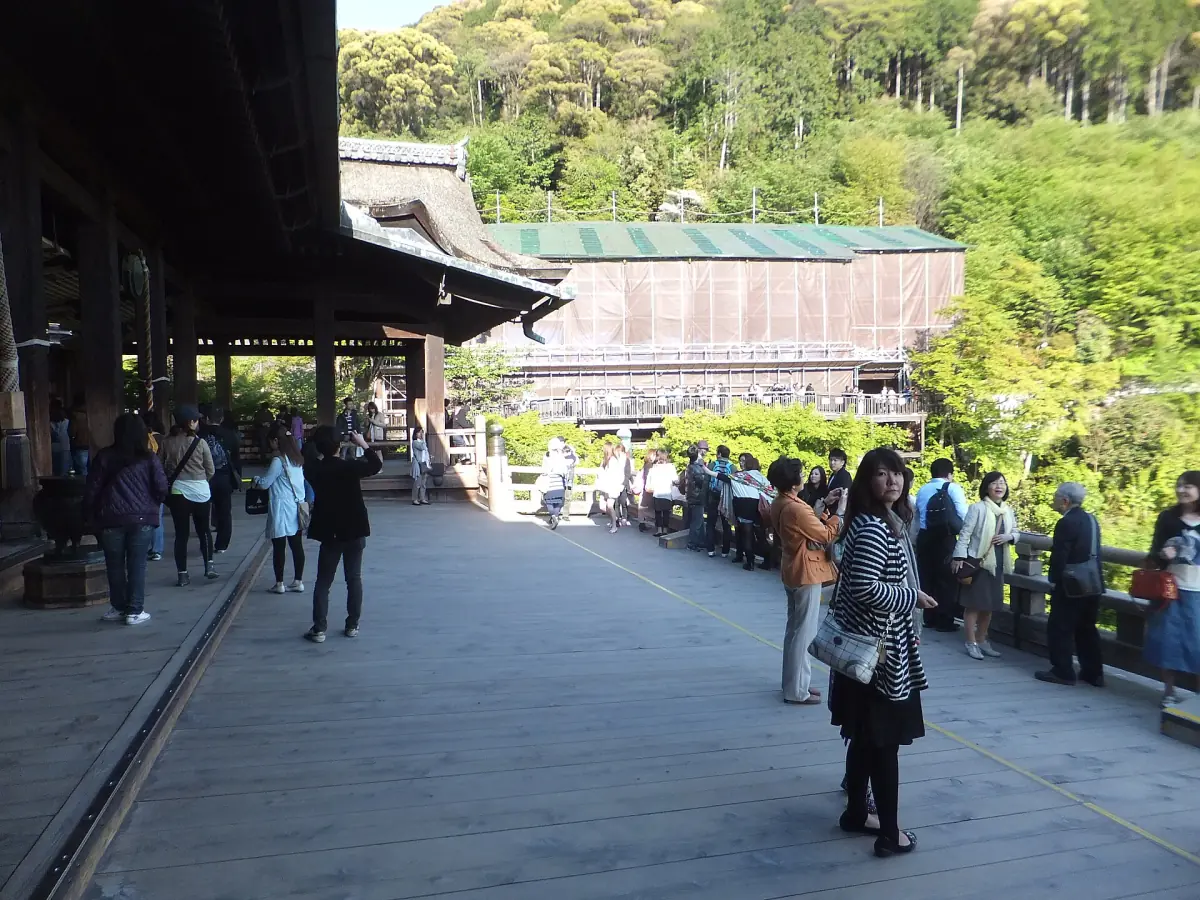
The wooden stage
About 13 m high, on 18 zelkova pillars, built in 1633.
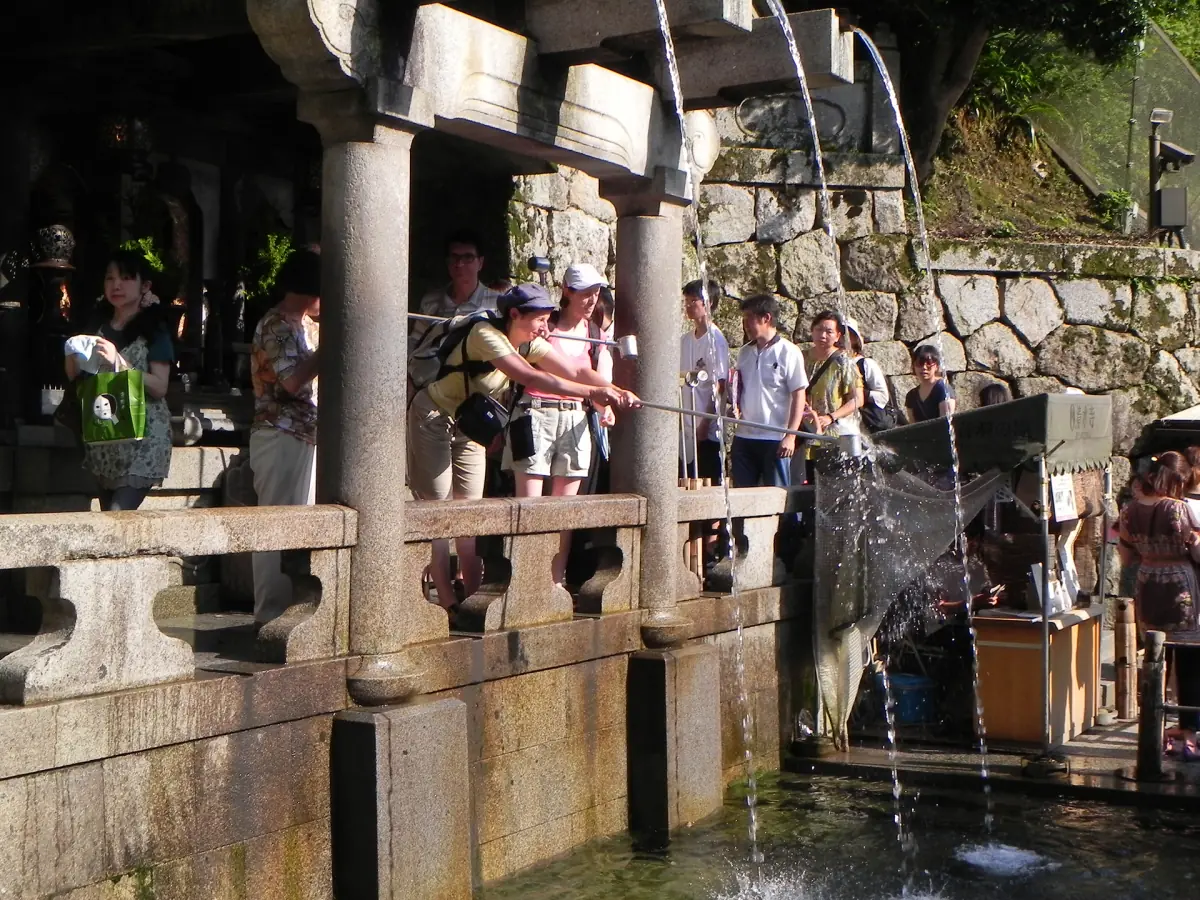
Otowa Waterfall
The three streams that give the temple its name.
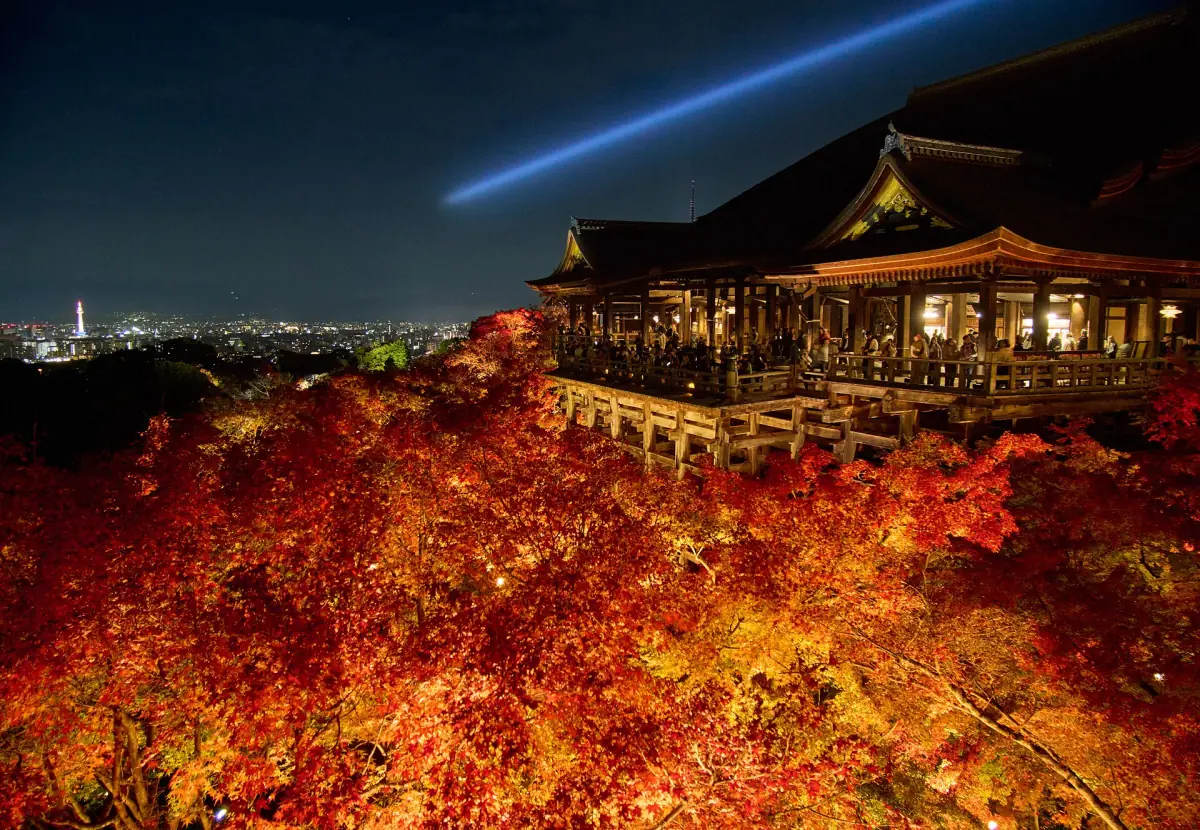
Night illumination
Spring, summer and autumn openings until 9:30 p.m.
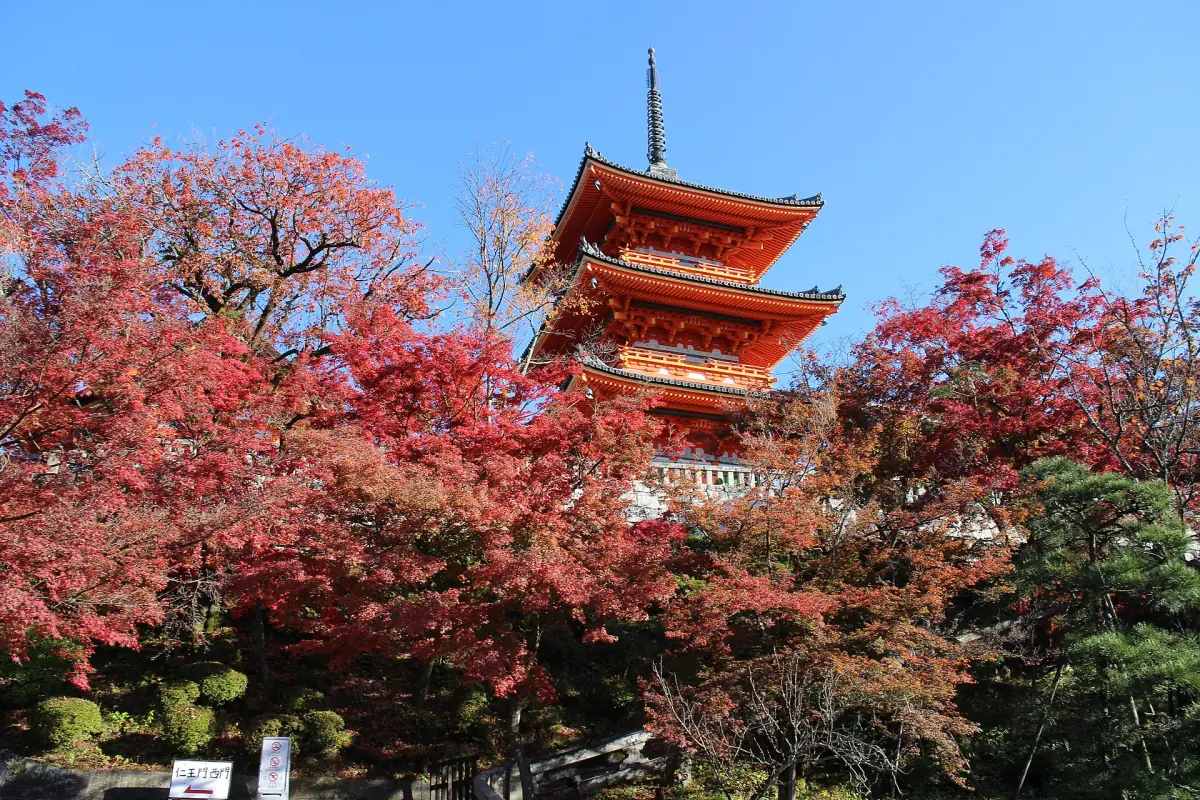
History of Kiyomizu-dera
From the founding tradition of 778 to the rebuilding of 1633.
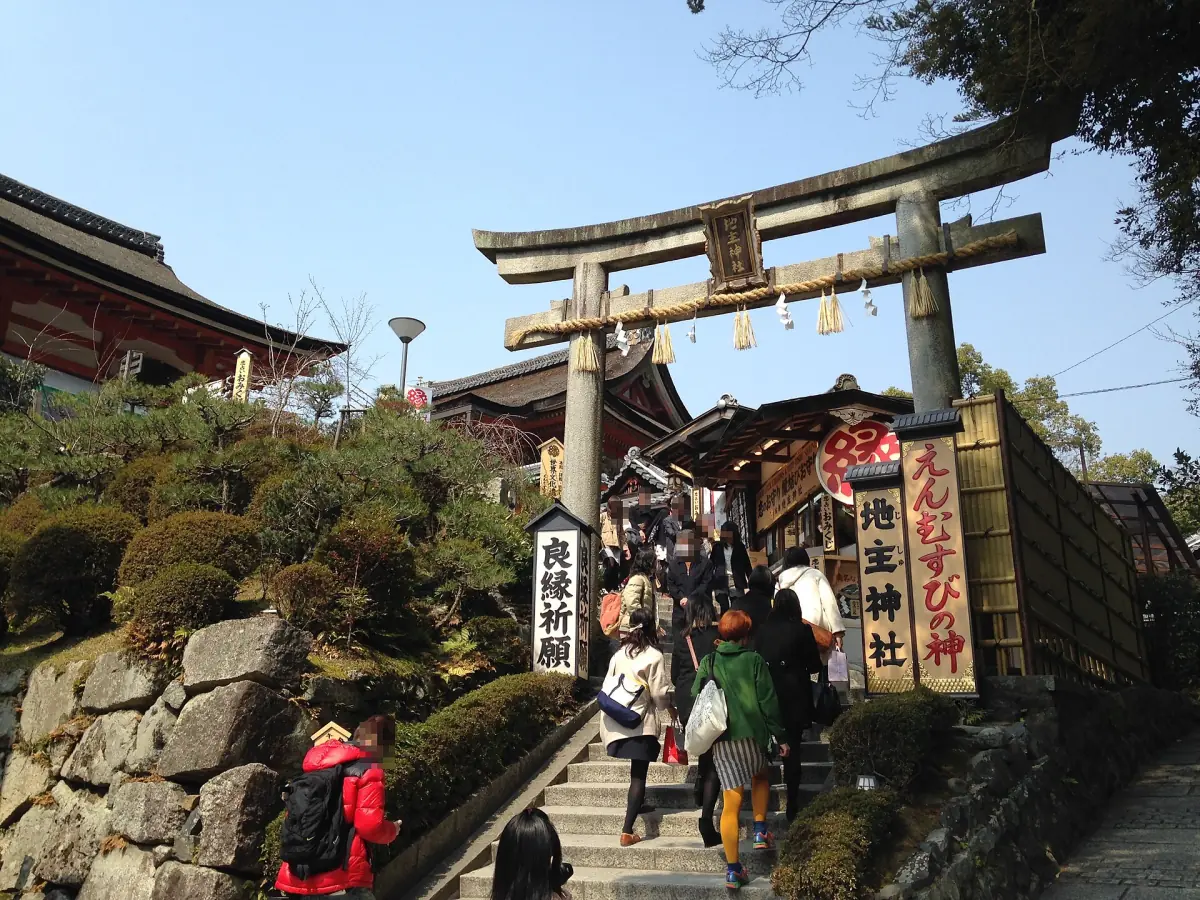
Jishu Shrine
The love stones and the current closure.
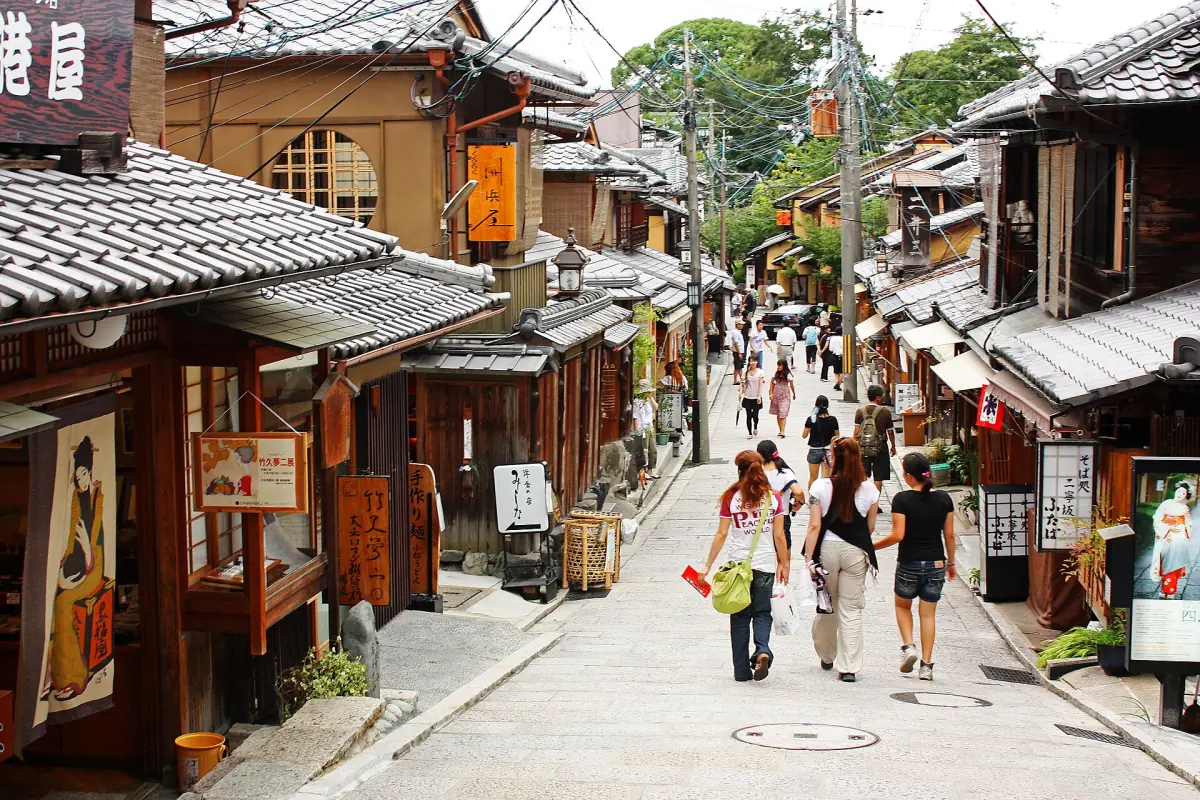
Sannenzaka and Ninenzaka
The stone lanes between Kodai-ji and the temple.
Gion
Hanamikoji, the evening streets and the rules for visitors.
Kimono rental in Kyoto
Price examples, return times and temple etiquette.
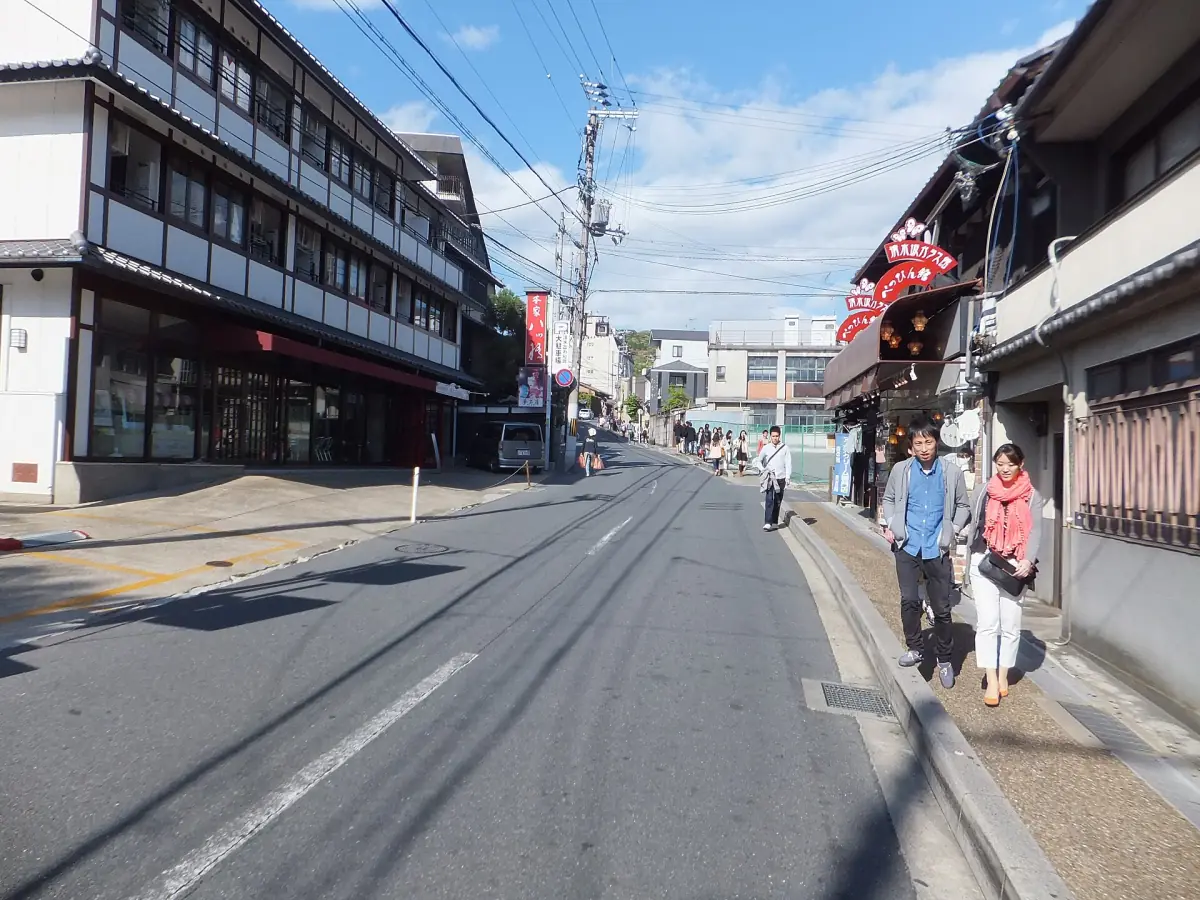
Getting there
Bus, train and the uphill walk from Gojozaka.
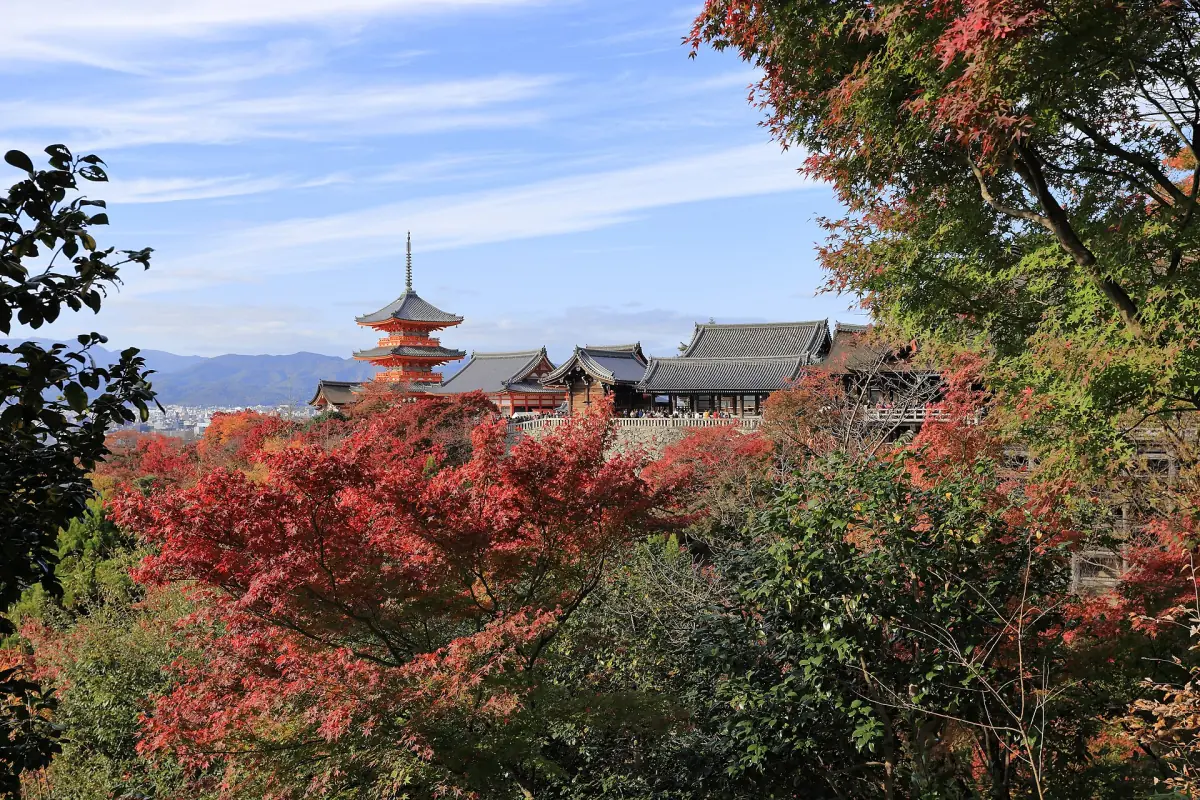
Best time to visit
Cherry blossom, autumn leaves and the quieter months.
Where to stay in Higashiyama
Areas, walking times and the Kyoto lodging tax.
A day around the temple
One way to fit the pieces together.
Early: the temple
The gates open at 6:00 a.m. Go to the main hall, the stage and the Otowa Waterfall first, before the crowds build up.
The wooden stage →Midday: the lanes
Walk down through Sannenzaka and Ninenzaka, where the old shops and stone steps are. From Higashiyama subway station the same lanes take about 35 minutes to the temple on foot.
Sannenzaka and Ninenzaka →Afternoon: Yasaka and Gion
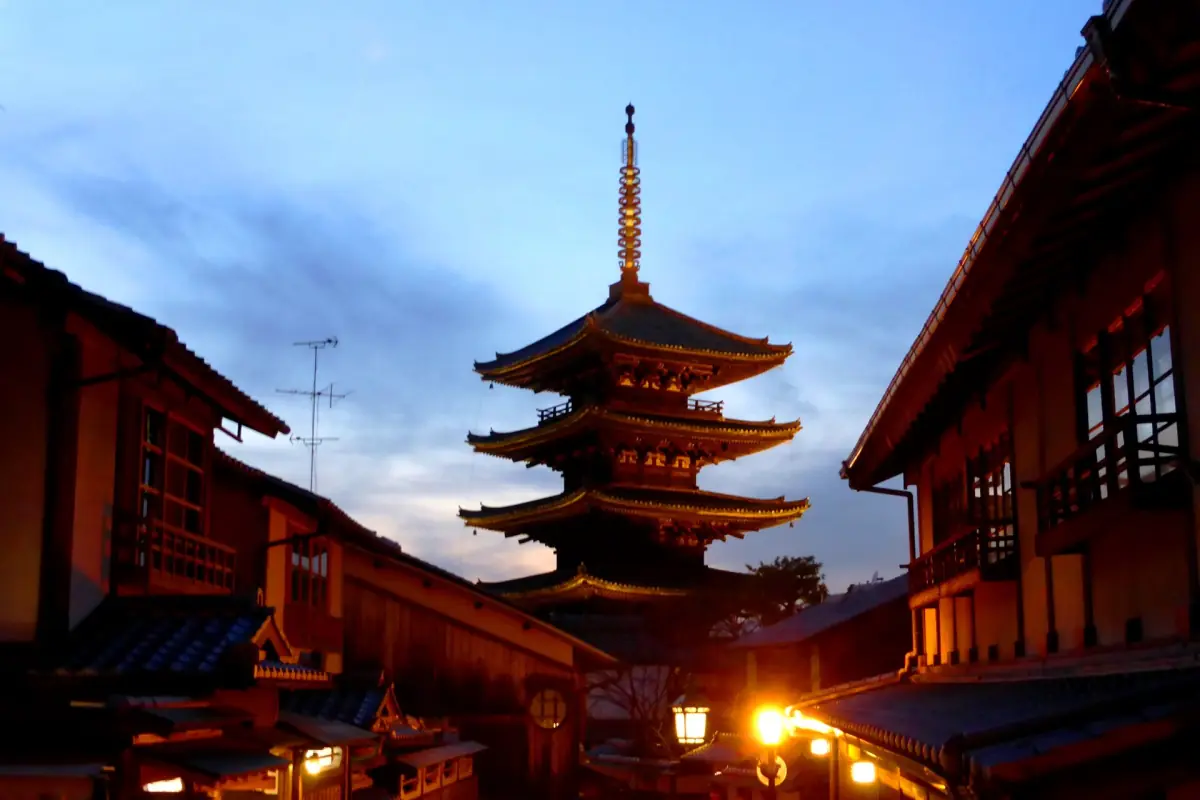
The Yasaka Pagoda, 46 m high, stands between the temple and the Yasaka Shrine. Gion lies beyond it and has its own rules for photos and for the streets.
Gion →Evening: the night openings
On the three night opening periods of 2026 the temple stays open until 9:30 p.m. Outside those dates the gates close at 6:00 or 6:30 p.m.
Night illumination →A few things to know before you plan
The points that change a day at the temple.
Admission is JPY 500
Adults pay JPY 500 and elementary and junior high pupils pay JPY 200 in 2026. Night openings use the same prices and need no reservation.
Tickets and hours →Jishu Shrine is closed
The shrine and its love stones are closed for repair work, and the reopening date is open. Plan your visit without it.
Jishu Shrine →The stage stands on 18 pillars
The wooden stage is just under 13 m high and rests on 18 zelkova pillars, joined by crossbeams without nails.
The stage →Three night openings in 2026
The temple stays open until 9:30 p.m. from 27 March to 5 April, from 14 to 16 August and from 21 to 30 November. The last entry is 9 p.m.
Night illumination →The bus-only day pass is gone
Kyoto no longer sells a pass for buses alone. The combined subway and bus pass costs JPY 1,100 for adults and JPY 550 for children.
Getting there →Beyond Kiyomizu-dera
Another famous Kyoto site has its own guide.
Fushimi Inari is a separate shrine in the Fushimi district, not part of the Kiyomizu-dera grounds. If you plan a second day, the Fushimi Inari guide covers it. This site stays with Kiyomizu-dera and the streets around it.
More independent guides to Kyoto
Separate guides from the same team, each focused on one Kyoto sight.
Kiyomizu-dera: frequently asked questions
How much does Kiyomizu-dera cost?
Admission is JPY 500 for adults and JPY 200 for elementary and junior high pupils in 2026. There is no group discount. See the tickets page for free entry and extras.
When is Kiyomizu-dera open?
The 2026 calendar starts at 6:00 a.m. every day. Closing is 6 p.m. for most of the year, 6:30 p.m. from 1 July to 31 August and 9:30 p.m. on the night opening dates. The full table is on the tickets page.
How do I get to Kiyomizu-dera from Kyoto Station?
Take city bus 206 to Gojozaka and walk uphill for about 10 minutes. Another option is the Keihan line to Kiyomizu-Gojo station, then a walk of about 25 minutes. Buses can be full and slow in busy seasons. See getting there.
Is Jishu Shrine open?
No. It is closed for repair work and the reopening date is open. The Jishu Shrine page explains what the love stones are.
When is the best time to visit?
Cherry blossom usually comes from late March to early April and autumn leaves from mid November to early December. The exact peak moves with the weather. The temple opens at 6:00 a.m., which is the simplest way to avoid the busiest hours. See best time to visit.
Is this the official website of Kiyomizu-dera?
No. This is an independent travel guide with no connection to the temple, Kyoto City, tour companies, rental shops or hotels.