The Otowa Waterfall at a glance
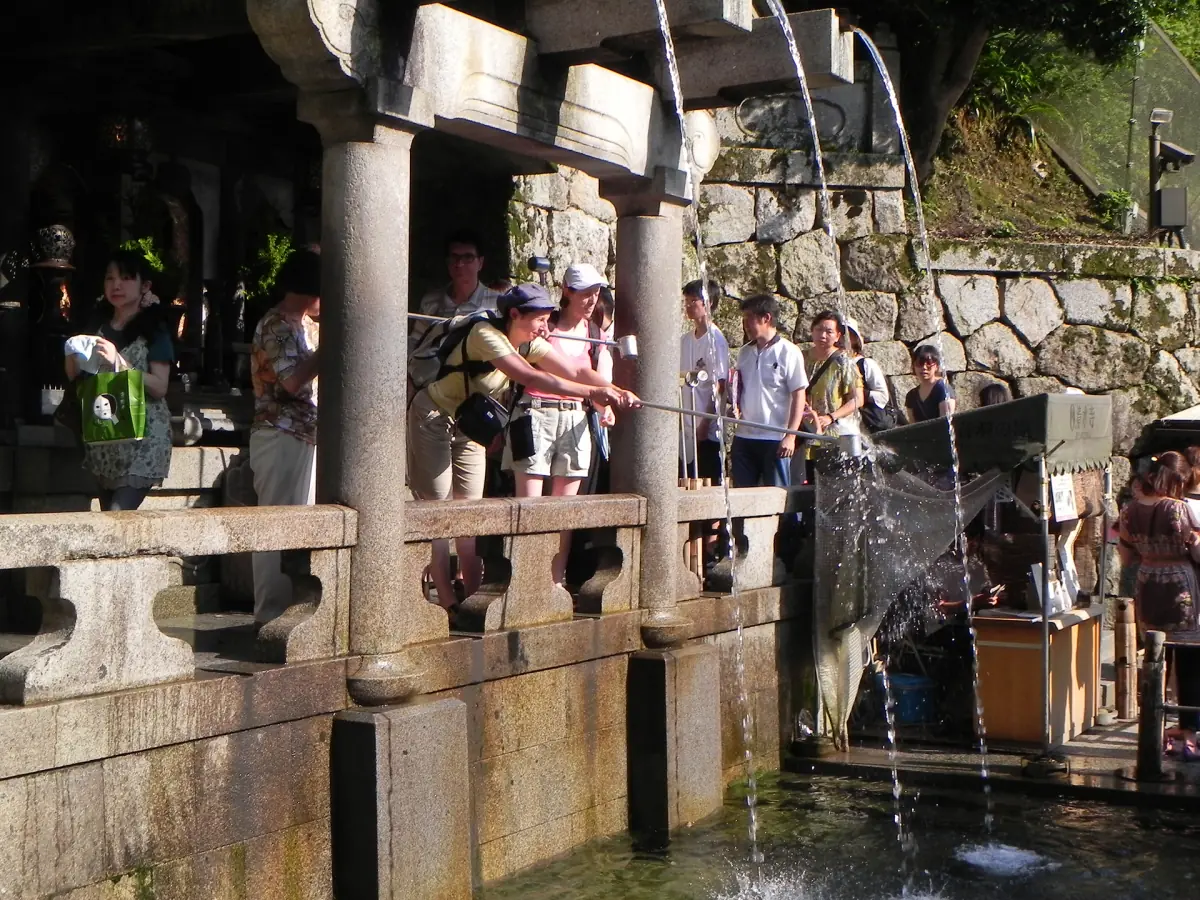
The Otowa Waterfall is a small fall of three thin streams below the main hall of Kiyomizu-dera. Visitors catch the water in ladles on long handles. The temple's name means pure water, and this spring is where the founding tradition begins.
The waterfall is a place of prayer. Lines move slowly because each person takes a moment at the basin. A visit is covered by the entrance ticket: JPY 500 for adults and JPY 200 for elementary and junior high pupils in 2026. The grounds open at 6:00 a.m.
The name and the founding tradition
Why a waterfall gives a temple its name.
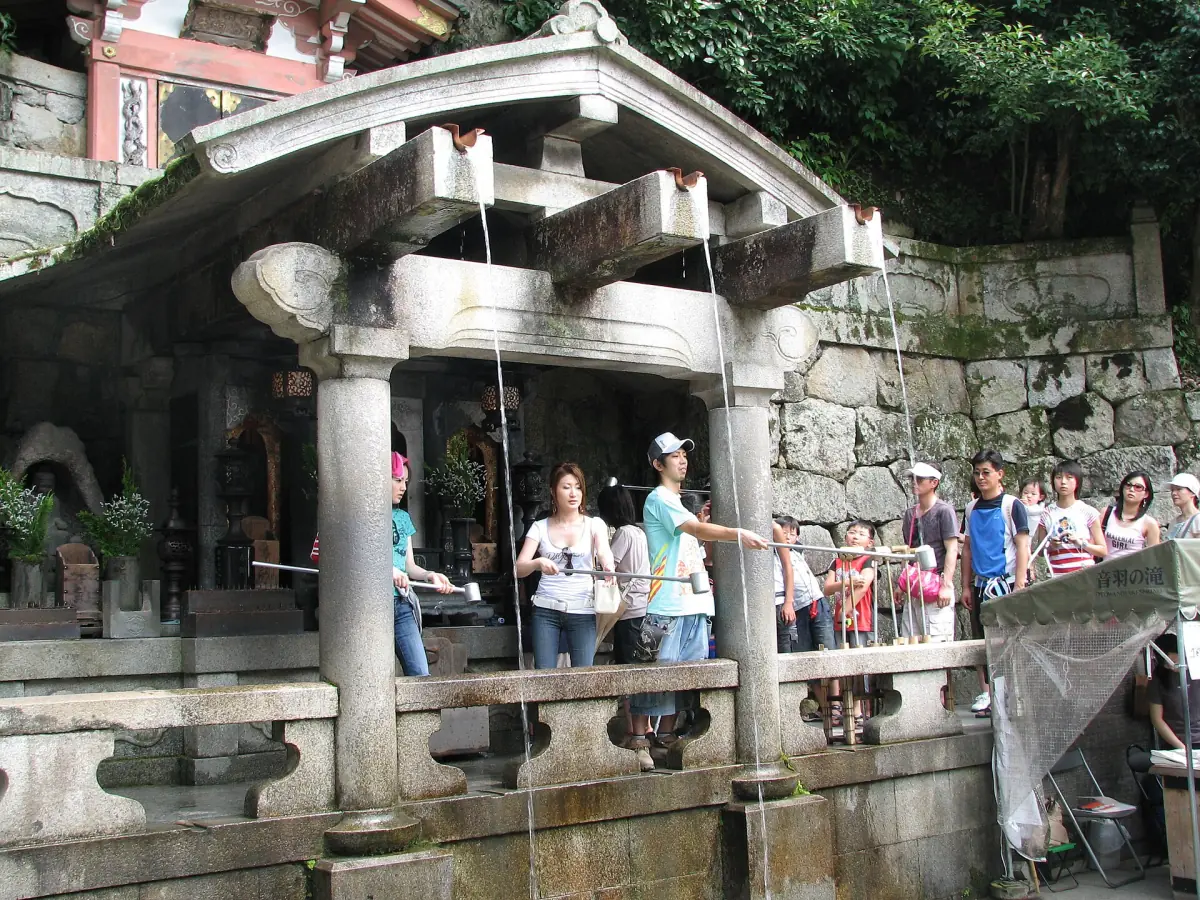
Kiyomizu means pure water, and the Otowa Waterfall is the spring behind that name. The founding tradition of the temple, dated to 778, begins with a dream, with Kenshin finding the water and with a meeting with the hermit Gyoei. It is the story the temple itself tells about its beginning.
The water is traditionally called Konjiki-sui and Enmei-sui. These are religious names for a sacred spring, not a health claim of any kind.
Read more on the history of Kiyomizu-dera, from the founding tradition to the rebuilding of the main hall in 1633.
Kyoto tours that include Kiyomizu-dera
Walking tours and guided days in Higashiyama with the temple and its waterfall on the route, with live prices and availability.
The three streams
How the ritual works.
Three streams, one ladle
Three streams fall into a basin, and visitors hold out a ladle on a long handle to catch the water. The prayer that goes with it is for the purification of the six senses and for wishes to be fulfilled.
Drinking is your own decision
The water is part of a ritual. Whether you drink from the ladle is up to you. Do not climb into the water or stand under the falls.
Respect the line
Everyone waits for their turn at the basin. Move on once you have caught your water so the line keeps moving.
Photos
Take pictures without blocking the line, and leave other visitors out of your frame while they pray. Tripods and monopods are not allowed.
Where the waterfall is on the grounds
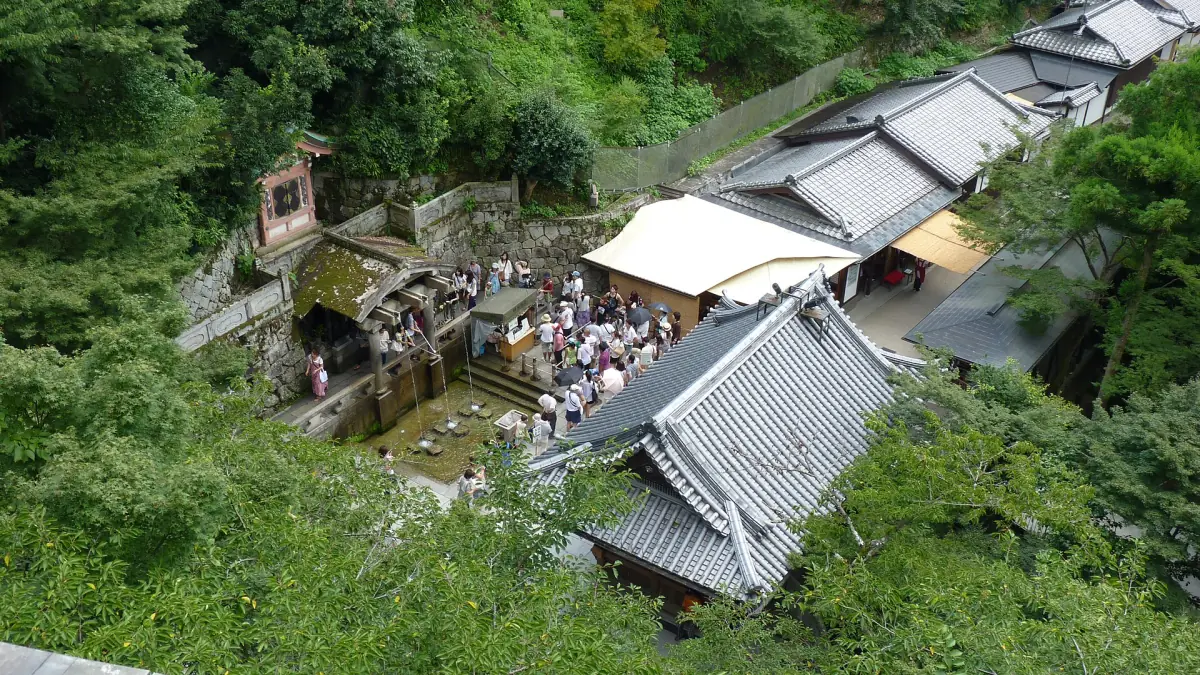
The falls lie below Okuno-in and the main hall zone, and the grounds map shows them as a stop of their own. Okuno-in sits above the waterfall. From its stage you see the stage of the main hall and the city beyond it.
Allow time for the line, and some more for the Zuigu-do hall, where the dark passage Tainai-meguri lies. It costs about JPY 100 extra and is not for everyone, because it is dark and you take off your shoes.
The stops around the waterfall
What each one offers and what it costs.
| Stop on the grounds | What to see | Extra cost |
|---|---|---|
| Main hall and stage | The platform and the view over Kyoto | – |
| Okuno-in | A second stage above the waterfall, with a view of the main hall | – |
| Otowa Waterfall | The three streams and the ladles | – |
| Zuigu-do | The hall of Daizuigu Bodhisattva and the dark passage Tainai-meguri | About JPY 100 for Tainai-meguri |
The stage and its structure have their own page: the wooden stage.
Planning around the queue
The wait changes with the season and the hour.
Go early
The grounds open at 6:00 a.m., and the early hours are the simplest way to shorten a wait. How long the line is on your day cannot be promised.
Hours and tickets →Busy seasons
Expect a longer line during the cherry blossom, usually from late March to early April, and during the autumn leaves from mid November to early December.
Best time to visit →Evening openings
On the night opening dates the temple stays open until 9:30 p.m. with the last entry at 9:00 p.m. No reservation is needed.
Night illumination →Combine with the stage
Plan the stage and the waterfall together, since they lie close to each other on the same slope.
The wooden stage →Etiquette at the waterfall
Simple rules for a place of prayer.
- Speak quietly and do not smoke on the grounds.
- Do not eat or drink while walking, except at cafes and tea rooms.
- Stay out of roped-off areas and do not block the paths.
- Drones, tripods and monopods are not allowed. Commercial photo shoots need permission.
- Take your trash with you.
The same rules apply across the temple. Jishu Shrine on the same grounds is closed for repair work at the moment, as described on the Jishu Shrine page. If you plan a second day in Kyoto, Fushimi Inari has its own guide.
Otowa Waterfall: frequently asked questions
What are the three streams of the Otowa Waterfall for?
Visitors catch the water with long-handled ladles. The prayer that goes with it is for the purification of the six senses and for wishes to be fulfilled.
Should I drink the water?
Whether you drink is your own decision. The water is part of a ritual. Do not enter the water or stand under the falls.
How long is the queue?
It depends on the season and the hour, and no fixed time can be promised. The opening time of 6:00 a.m. is the simplest way to avoid a long wait.
Is the waterfall included in the entrance ticket?
Yes. You walk to it as part of the visit. Admission is JPY 500 for adults in 2026 and JPY 200 for elementary and junior high pupils.
Where is the waterfall in relation to the stage?
Below Okuno-in and the main hall zone. From Okuno-in you look back at the stage, and the waterfall is marked as its own stop on the grounds map.
Can I bathe or stand under the water?
No. The waterfall is a place for catching the water with a ladle and for prayer, not for bathing.