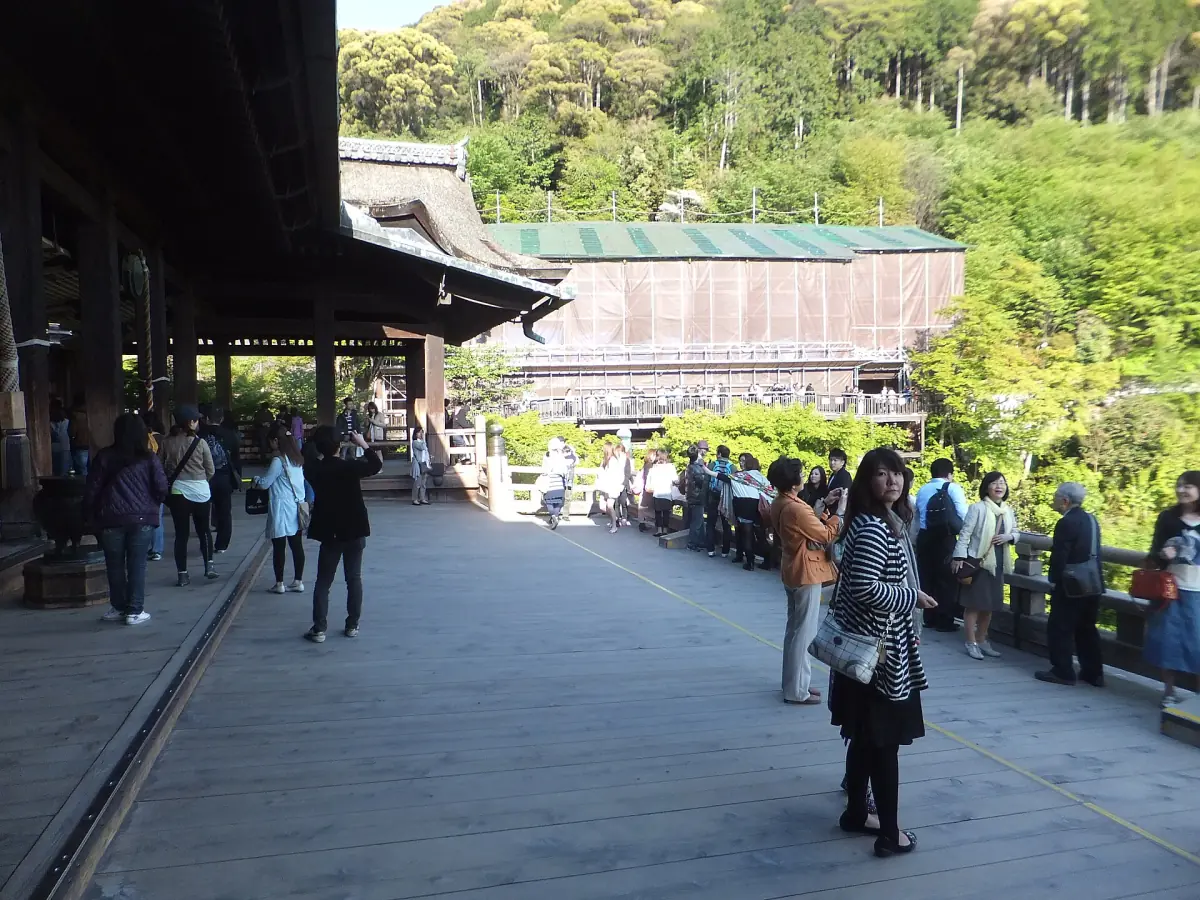
The Kiyomizu stage at a glance
The stage is a large wooden platform attached to the main hall of Kiyomizu-dera. It extends over the slope of Mount Otowa and gives a wide view across Kyoto. The present stage dates from 1633, the same year as the present main hall, which is a National Treasure.
You walk onto the stage as part of the normal visit to the main hall, so it is covered by the entrance ticket. The stage is the reason most people come. It is also the reason the main hall is crowded, so the time of day matters as much as the season.
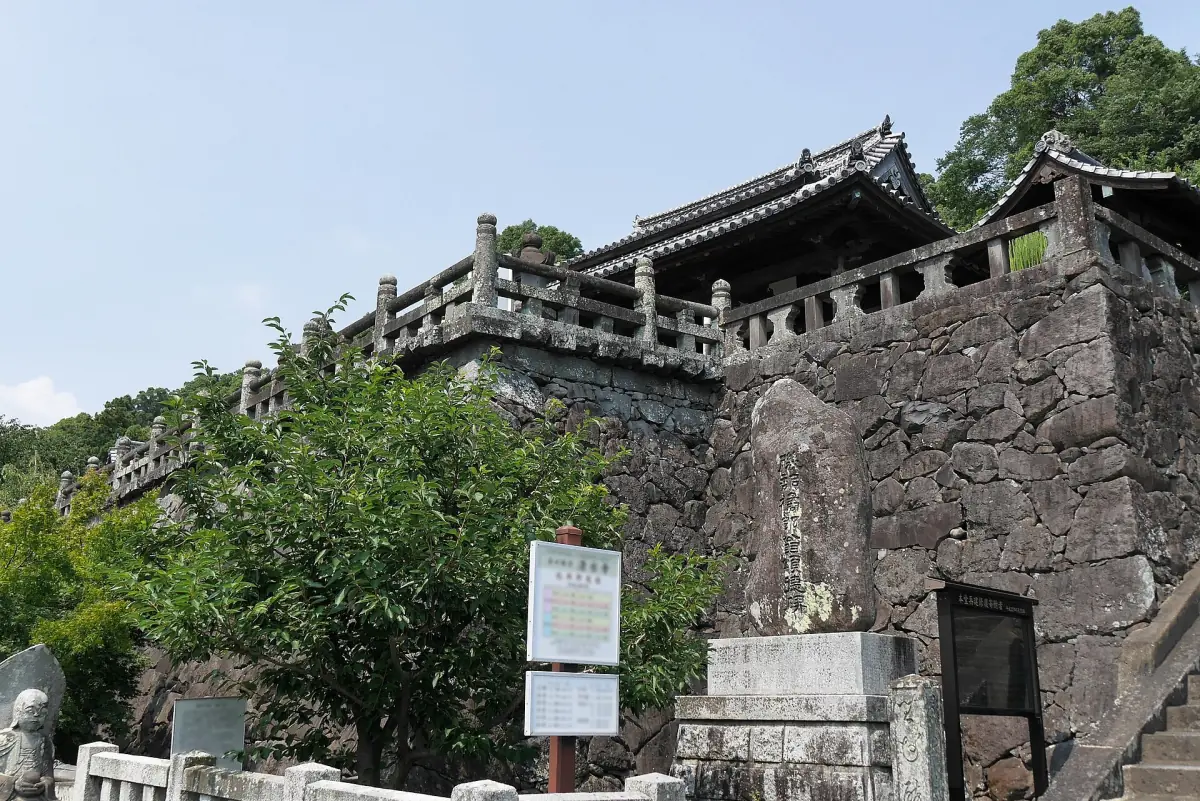
How the stage is built
Pillars, crossbeams and no nails in the substructure.
The stage rests on 18 pillars of zelkova, a hardwood. The trees were more than 400 years old when they were cut. The largest pillars are about 12 m tall and about 2 m around, which is the circumference, not the diameter. Horizontal beams run through the pillars and tie them together. This substructure is joined without nails.
That description belongs to the stage framework. It does not mean that no metal was used anywhere in the temple. The count of 18 pillars refers to the stage. Other supports of the main hall are a separate matter.
| Detail | Value |
|---|---|
| Height of the stage | Just under 13 m |
| Number of pillars under the stage | 18, zelkova |
| Age of the trees when cut | More than 400 years |
| Tallest pillars | About 12 m high, about 2 m around |
| Joints of the substructure | Crossbeams through the pillars, no nails |
| Present stage and main hall | 1633 |
Kyoto tours that include Kiyomizu-dera
Walking tours and guided days in Higashiyama with the temple on the route, with live prices and availability.
Where to look at the stage
The view of the stage and the view from it are two different things.
On the stage
From the platform you look out over the slope and across Kyoto. Keep moving along the platform and leave room for others, since the view draws a crowd.
From Okuno-in
Okuno-in lies above the Otowa Waterfall. It has its own stage that juts out, and from it you see the main hall stage and the city. This is the place for a photo of the stage itself.
Otowa Waterfall →The pillars below
The wooden pillars under the platform show how the stage is built. The photo at the top of the page shows them.
Pagoda and gate
The three-story pagoda is about 30 m high. It was founded in 847, and the present building dates from 1632. The Niomon, the main gate, is about 14 m high and was rebuilt around 1500 after a fire in 1469.
History of the temple →Planning your time on the stage
Practical points that save a wait.
Go early
The gates open at 6:00 a.m. every day. Arriving early is the simplest planning choice for a calmer view.
Hours and tickets →Seasons
Cherry blossom usually comes from late March to early April, and autumn leaves from mid November to early December. The peak moves with the weather and is not fixed.
Best time to visit →Evenings
On the night opening dates the temple is lit and stays open until 9:30 p.m. See the dates for 2026.
Night illumination →Access
Step-free routes exist for the public areas of the grounds, and a map is available at the Todoroki-mon gate. Ask there before you plan a route with a wheelchair or stroller.
Repairs of the main hall
The big work is finished.
The main hall was repaired in stages. The roof work began in February 2017 and finished at the end of 2019. The scaffolding and covering came down in February 2020, and the floorboards of the stage were renewed from May 2020. A ceremony on 3 December 2020 marked the end of the repairs to the main hall, including the roof and the stage boards.
Rules on the platform and the grounds are simple. Drones, tripods and monopods are not allowed, and commercial shoots need permission. Speak quietly, keep to the paths and do not enter roped-off areas. You may not eat or drink while walking. For a wider day in Kyoto, the sister guide to Kyoto covers more sites. See also the lanes below the temple on the Sannenzaka and Ninenzaka page.
The Kiyomizu stage: frequently asked questions
How high is the Kiyomizu stage?
Just under 13 m above the slope. It stands on 18 zelkova pillars, and the tallest of them are about 12 m high.
Is the stage built without nails?
The substructure is. Crossbeams run through the 18 pillars and hold the frame together without nails. That does not apply to every part of the temple.
When was the stage built?
The present stage dates from 1633, together with the present main hall. The temple's founding tradition goes back to 778. See the history page.
Is the stage included in the entrance ticket?
Yes, you walk onto it as part of the main hall visit. Admission is JPY 500 for adults and JPY 200 for elementary and junior high pupils in 2026.
Is the stage closed for renovation?
The large repair of the roof and the stage floorboards ended in December 2020. Check the current hours before you go, as with any visit.
Can I use a tripod or a drone?
No. Drones, tripods and monopods are not allowed on the grounds, and commercial shoots need permission.